
We believe in Neruoplasticity
The brain and nervous system are capable of change across the lifespan. Through attuned, somatic, and neuroscience-informed therapy, we support the brain’s natural ability to rewire, heal, and build new patterns of safety, resilience, and connection.
What We Offer
At Wallflower Connection Therapy Services, I use body-based and brain-based approaches that recognize trauma, stress, and emotional pain are not just cognitive experiences—they live in the nervous system. These modalities help clients move beyond insight alone and toward deep, lasting regulation and healing.
-
Developed from neuroscience and trauma research, Brainspotting helps access and process experiences stored deep in the brain and body.
Brainspotting works by identifying specific eye positions—called brainspots—that are connected to emotional and physiological activation. By gently focusing on these brainspots, the brain is able to process trauma, anxiety, and emotional distress at a deeper, more efficient level than talk therapy alone.
This approach is especially helpful for trauma, anxiety, performance blocks, chronic stress, and experiences that feel difficult to put into words. Sessions are attuned, paced, and grounded in nervous system safety.
-
Sensorimotor Psychotherapy integrates talk therapy with awareness of the body to help resolve trauma and attachment wounds.
Rather than focusing only on thoughts or memories, this approach explores how emotions, movement, posture, and physical sensations reflect past experiences. Clients learn to notice and gently work with bodily responses—such as tension, numbness, or impulses to move—allowing the nervous system to complete defensive responses that may have been interrupted by trauma.
This method is particularly effective for developmental trauma, PTSD, dissociation, and relational patterns that feel automatic or hard to change
-
EMDR is a structured, evidence-based therapy designed to help the brain reprocess distressing memories so they no longer feel overwhelming or intrusive.
Using bilateral stimulation—such as eye movements or tapping—EMDR helps the brain move traumatic experiences from a “stuck” state into adaptive resolution. Over time, clients often notice reduced emotional intensity, fewer triggers, and new perspectives emerging naturally.
EMDR is widely used for trauma, PTSD, anxiety, grief, and adverse life experiences, and it does not require detailed verbal retelling of traumatic events.
-
Focusing is a gentle, mindful approach that helps clients tune into their body’s inner wisdom.
This method involves slowing down and noticing subtle bodily sensations—often referred to as the felt sense—that carry emotional meaning. By listening to these sensations with curiosity and compassion, clients often experience clarity, emotional release, and meaningful internal shifts.
Focusing is especially helpful for clients who feel disconnected from their emotions, stuck in indecision, or overwhelmed by internal noise. It supports self-trust, emotional regulation, and deeper self-understanding.
-
Polyvagal-informed therapy is rooted in neuroscience and focuses on understanding and regulating the autonomic nervous system.
This approach helps clients recognize how their nervous system responds to safety, danger, and connection. By learning to identify patterns of fight, flight, freeze, or shutdown, clients gain tools to restore a sense of safety and stability in their body.
Polyvagal-informed work is foundational for trauma recovery, anxiety, depression, and relational healing. It emphasizes co-regulation, grounding, and building resilience through nervous system awareness. description
-
Advanced TF-CBT is an evidence-based trauma treatment that helps reduce trauma-related symptoms by strengthening coping skills, emotional regulation, and cognitive processing. This approach is structured yet flexible, supporting healing while remaining attuned to the nervous system and each client’s window of tolerance.
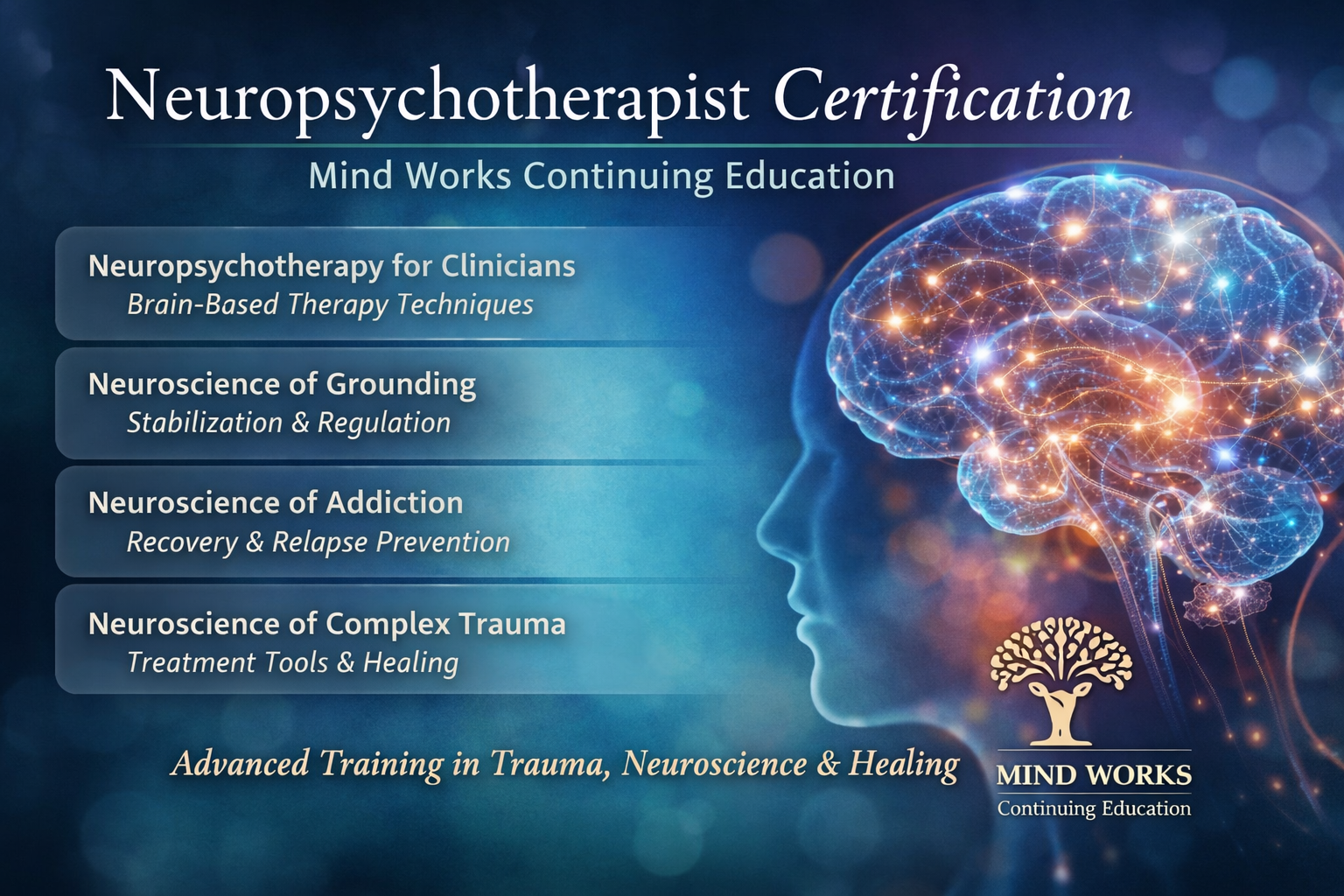
Neuropsychotherapy Education
Neuropsychotherapy for Clinicians
A foundational neuroscience-informed course that teaches how to apply brain-based techniques to therapy — including integrating top-down, bottom-up, and horizontal interventions to promote adaptive neural change in clients with trauma, anxiety, depression, and addiction
Neuroscience of Grounding Techniques
Focuses on the brain science behind grounding strategies that support emotional regulation, nervous system stabilization, and immediate relief from stress and dysregulation.
Neuroscience of Addiction
Explores the neurocircuitry of addiction and relapse, teaching clinicians practical neuroscience-based strategies for reducing risk and supporting recovery.
Neuroscience of Complex Trauma — Treatment Tools
Delivers an in-depth look at how early adversity reshapes brain networks across the lifespan and provides step-by-step clinical tools for helping clients build resilience and recover from complex trauma.